McLEAN’S FUNERAL
(Originally published in the Boston Globe Sunday Magazine)
Ma stands at the kitchen sink, her back to me, looking out the window at the neat blue house next door. The leaves have just started dropping. They’re as orange and yellow and bright as crayons. The smell of brownies baking takes the edge off the kitchen’s bleached cleanliness.
“Smells good,” I say to my mother’s back.
She snaps around. Her eyes, usually quiet, seem to throw off blue and purple sparks.
“Well, at least I can do something right around here!” she says, then turns back to face the sink.
Ma is angry because Bernadette didn’t like the white pew bows that Ma spent most of yesterday afternoon cutting and tying. My sister went back to the church, took down all the white bows, and put up pink ones instead. My mother washes the church’s altar cloths, and I think she took the change of decor personally.
“It needed some color,” Bern said, trying to explain to Ma, after the fact.
“Well it’s your wedding, Bernadette,” Ma said, as if pink bows showed poor judgment. They both acted like it was a big deal. They probably were looking for something to fight about.
Earlier in the week, we were taking a break from cleaning. I was leaning against the sink while Bernadette and Ma sat at the kitchen table, arguing. Bernadette had a glass of wine that she kept moving in little circles on the green tablecloth. Ma was drinking some fruity-smelling tea.
“The test is very inexpensive,” said Bernadette, who’d been trying to get Ma to test the house for radon.
“Bernadette, I’m not interested,” Ma said.
“But you can’t tell by smell or anything,” Bernadette insisted. “Don’t you want to know if there’s poison gas coming into the house?”
“No, Bernadette, I don’t think I do,” Ma said.
“The gas comes out of rocks in the ground, under the house, and it collects in the house real slowly, and that’s why old people finally die,” Bern said. “That’s the theory.”
“That’s ridiculous. Sometimes people just die,” Ma said. She sounded tired. “Science isn’t the reason for everything, Bernadette. I honestly don’t know which of you is worse, the one who uses her college education or the one who doesn’t.” Ma flashed a look at me.
“It’s not like I’m a charity case,” I said.
“Well, you do land on your feet,” she said, “but you can’t count on that to last forever.”
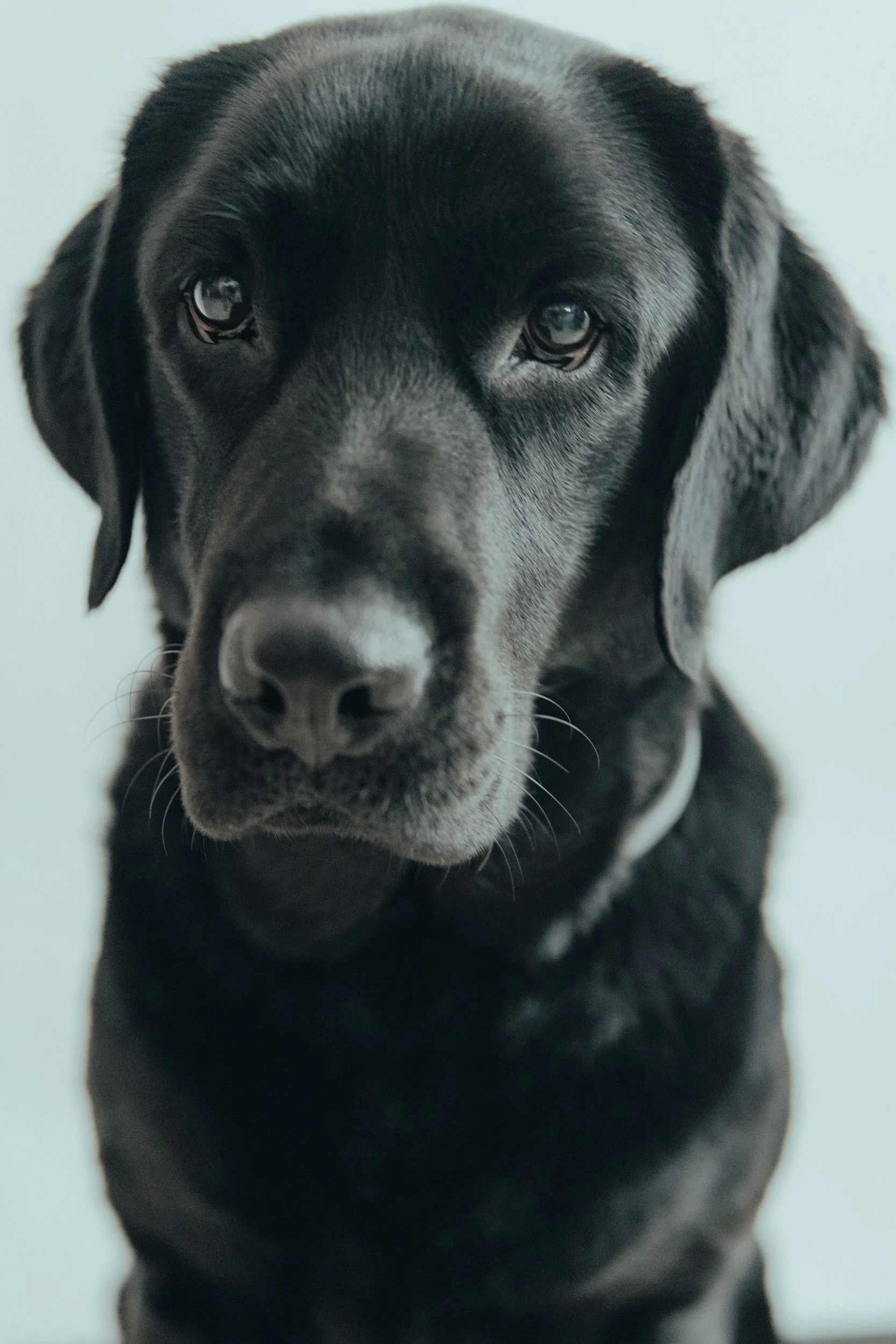
McLean growled, just to listen to himself. He was a good dog, very sweet-tempered, but he was getting old and gassy.
“McLean, you stink,” Bernadette said, pushing away her wine glass. “You make me sick.”
He had bad breath, too, which you could smell the second he put his snout on your leg for a pat. His coat was a rich rust color, but it was thick, and it held onto bad odors. The dog stank of cigar smoke and cooked onions. Sometimes Ma banned him from the hosue for a few days while his fur aired out.
*
There are envelopes on the kitchen table, waiting to be mailed — Bernadette’s wedding announcements, complete with a portrait of Bernadette in her wedding dress.
“I’m going to the post office,” I tell Ma. “I’ll be right back.”
“Do whatever you like,” she replies, waving her hand dismissively. “That’s what everyone else around here does.”
I run upstairs to Bernadette’s room, where she’s packing for her honeymoon.
“This is cheating,” I tell her, waving the envelopes. Bern looks up from her half-filled suitcase. “I look at wedding announcements all the time, and I can always tell if the picture was taken before the actual wedding day. The bride looks fake.”
“It’s more convenient this way, Margaret,” Bern says. “You need to have things under control when you’re planning a wedding. When it’s your turn, you’ll see.” The Voice of Wisdom turns back to her suitcase.
Her satin wedding gown is on a dressmaker’s form. It looks creepy, like a headless bride. The little crown that Ma wore when she married Daddy is wrapped in tissue paper, resuscitated with new lace, for tomorrow.
Bernadette’s room is almost exactly the way is was when she left for college. She has trophies from being a basketball star at the regional high school, where she was two years ahead of me. We’d always check the sports page for her name, and there it would be, “Bernadette Connolly,” frequently with a photo, because Bernadette was a very skilled, very strong basketball player. There she’d be, stretching or shooting or reaching, my sister, made up of a thousand tiny newspaper dots.
I had speech and debate trophies. All through high school, I was a strong contender at the statewide level, which sounds real smart, but all you had to be was a good talker. Senior year, I won the state championship. My name, of course, was not in the papers. Bernadette felt bad, but I told her it didn’t matter.
Bernadette is much prettier than me. She has walnut-shaped eyes, and they’re dark blue, and her hair is long and the color of unvarnished wood. She wears it in a French braid, woven and stuck to her head. I think she takes being beautiful for granted. When we went out drinking she never brought money.
“Someone will buy drinks for us,” she’d say, but I always brought money, just in case.
I wave the envelopes at Bernadette.
“All right, I’ll mail them,” I say.
“Look for Dean,” she calls after me. “He walked to the corner store to buy sunscreen for our trip.”
I went down the back staircase, straight out to the side porch.
Daddy is nowhere to be found. My guess is he’s in the basement, sipping a Narragansett while pretending to examine the furnace. The wedding preparations have made him edgy, so he disappears every now and then.
Daddy put a lot of work into this wedding. He repainted the house and finished the garage he’d been building. The garage is perfect: all straight lines and white clapboard, matching the house, with pretty gold stagecoach lamps.
“Look at the shape of that garage,” he’d said on its completion. “That is a fine garage.”
*
Dean and I meet up on my way to the post office and walk along the common, toward town. He is calm and quiet.
“When I was little,” I tell him, ”I thought the people getting married were the bride and the broom.”
He laughs. He’s good that way.
Dean is a lawyer, and Bernadette is almost a doctor, and I’m what Dad calls a jack-of-all-trades. I’ve worked as a bartender, a temp, and a cater waiter. Everyone keeps at me, saying that I can do better, that I’m taking jobs that are beneath me.
“When are you going to use that wonderful mind?” Bern says.
“When are you going to use the college education your father and I paid for?” Ma says.
But nothing seems to suit me; maybe I just like change too much. I can’t imagine working at the same place for five years, let alone thirty.
“Planning for the future?” Dean asks, in his innocent voice. They’ve all been discussing my “problem” again, and Dean has been elected to address it with me.
“I’m in transition,” I say.
“You’ve been in transition ever since I’ve known you, Margaret,” Dean says, which is a low blow, since he went out with Bernadette for six whole years before he got off his butt and proposed. She was just about tapping her foot in impatience, by the time he got around to it.
“I like living this way,” I say. “It’s fun. I can get up and go anytime.” I picture myself backpacking through Europe, or exploring Hawaiian volcanoes, free and alone.
“But you never go anywhere because you never have any money,” Dean says. “You hardly get out of the city.”
He’s got a point, but I’m not yet willing to concede.
“Well, at least the possibility is there,” I say.
“Ever think about going to law school?” Dean asks.
Ah. The latest solution.
“Nah,” I say tactlessly. “Sounds boring.”
We turn off the common and pass the cemetery, where Bernadette and I used to come for walks when she wanted to sneak a cigarette. That was before she went to college and saw photos of blackened lungs.
McLean is across the street, loping past the new real estate office, looking for something or tracking a scent. We keep walking.
Then, heavy rubber tires try to run backwards on the pavement and there’s a screech that grabs my backbone, and the world lurches and everything is too fast and underwater-slow, and McLean is bumped hard by an old, yellow car and it’s a little car but it makes a big hit. They hit flat, like two hands, and the dog doesn’t seem to fly at all, but must have because he hits the ground a good twenty feet away, right on the double yellow line. I run into the street, barely looking for cars, waving my hands around my head. Dean’s voice is somewhere behind me, and I reach the dog and press my fingers under his jaw, feeling for a beat, but I know from the blank eyes that there is no McLean there anymore.
“I think he’s gone, Dean,” I say.
“I think so too, Margaret,” he says, and his agreeing somehow confirms it.
There is no blood on the road. The only clue that something is wrong with McLean, that he’s anything but asleep, is that is head is to loose and floppy in my hand.
A bony man gets out of the car. He’s pasty, and his hair looks dark and brittle.
“I tried to stop,” he says. Dean starts talking with him. I run back to the house and it’s only a short way, not even a quarter mile, but my feet are so heavy, I can hardly move. I’m crying when I get home.
Ma turns toward me, away from the sink.
”What’s the matter?” she asks. The sparks are gone from her eyes. She knows that I am on the brink of telling her something terrible.
“I need a blanket,” I say. “An old one.”
“What’s the matter?” she asks again.
“The dog got hit by a car,” I tell her.
Ma takes a few steps toward the phone.
“I’ll call the vet,” she says.
“Don’t,” I say. “Just give me the blanket.”
*
Dean and Ma and I and the guy that hit McLean have a conference at the side of the road. Bernadette’s stethoscope, which Ma grabbed off the kitchen table, hangs uselessly around Ma’s neck. The old yellow car is off on the shoulder, its hazards blinking.
“He just came out of nowhere,” the man says, as if he had nothing to do with this. My mouth opens, and I’m ready to holler, to pound my fists against his skinny, frail frame, to splinter him, but I take a breath and hold everything back.
“These things happen,” Ma says. To my surprise, she doesn’t sound angry.
McLean is a bundle now, wrapped in worn pastel stripes. The bundle looks as peaceful as an afternoon nap.
Ma and I stand back and watch ourselves from a distance. We are firm and practical. Dean finishes talking with the man and then gently carries McLean home, and we follow him.
Dean finds Daddy, and the two of them go out back behind the new garage, with shovels. Ma and I sit in the kitchen, edgy and sad, and wait for Bernadette to come downstairs. We can hear her singing to herself as she gets out of the shower and towels off. The stethoscope sits on the table.
A few minutes later, Bernadette hurries downstairs, dressed for the rehearsal dinner. She doesn’t see our faces, hear our tight voices, because she is getting married tomorrow, and all guesses are that it will probably be a happy marriage.
“We have something to tell you,” Ma says. She sits Bernadette down at the kitchen table with a glass of wine, the only time I’ve ever seen her give someone a drink without asking. Mas sits down next to Bern, and pats her hand, and tells her how McLean came to be lying in a blanket behind the garage.
“My dog is dead?” Bernadette shrieks. The whole house goes cold. “My dog is dead?”
She knocks over the wine and rushes outside. No one can stop her. By the time we race to where Dean and Daddy have already dug the hole, she is lying on the ground in her new dress. Mud mucks her nylons and seeps into her shoes, and she unwraps the blanket and buries her face in the dog’s fur and wails. Dean sits beside her, rubbing her back.
The rest of us stand at the edge of the dog’s grave, and Ma tries singing “Kumbaya,” but it doesn’t take, so she stops. After a while, she leans toward me.
“The rehearsal is in an hour,” she whispers. “Go inside and get ready.”
*
First, I detour into the kitchen and pour myself a generous Scotch and soda. I bring the drink and the stethoscope upstairs with me. No use leaving reminders around.
In Bernadette’s room her suitcase is ready, upright at the end of the bed. I take the stethoscope and put the ends in my ears and reach beneath my shirt and press the cold disc against my skin. The drumming is faraway but reliable. For a moment, I understand why Bernadette is comforted by science. It’s as though there are no disorderly deaths, as though listening to a heart is all you need to do to keep it working.
Orange leaves rip away from the trees outside. Winter is coming and perhaps I will go south, to the Carolinas. I could be a florist or a real estate agent or a radio announcer.
I open the closet doors and look through Bernadette’s clothes, knowing she will be too crazy with grief to think. I pick out a dress for her to wear, and lay it across the bed. It’s turquoise wool with a big collar. Then I select a pair of black patent-leather heels and set those next to the dress, along with black nylons, because Bern hates flesh-colored stockings.
The whole time, my heart beats hard in my ears.
* * *